Between 1883 and 1929, Andrew Carnegie paid for roughly 1,600 public library buildings across the United States. Michigan received 61 of them between 1901 and 1918, funded with more than $1.6 million of Carnegie's steel fortune.
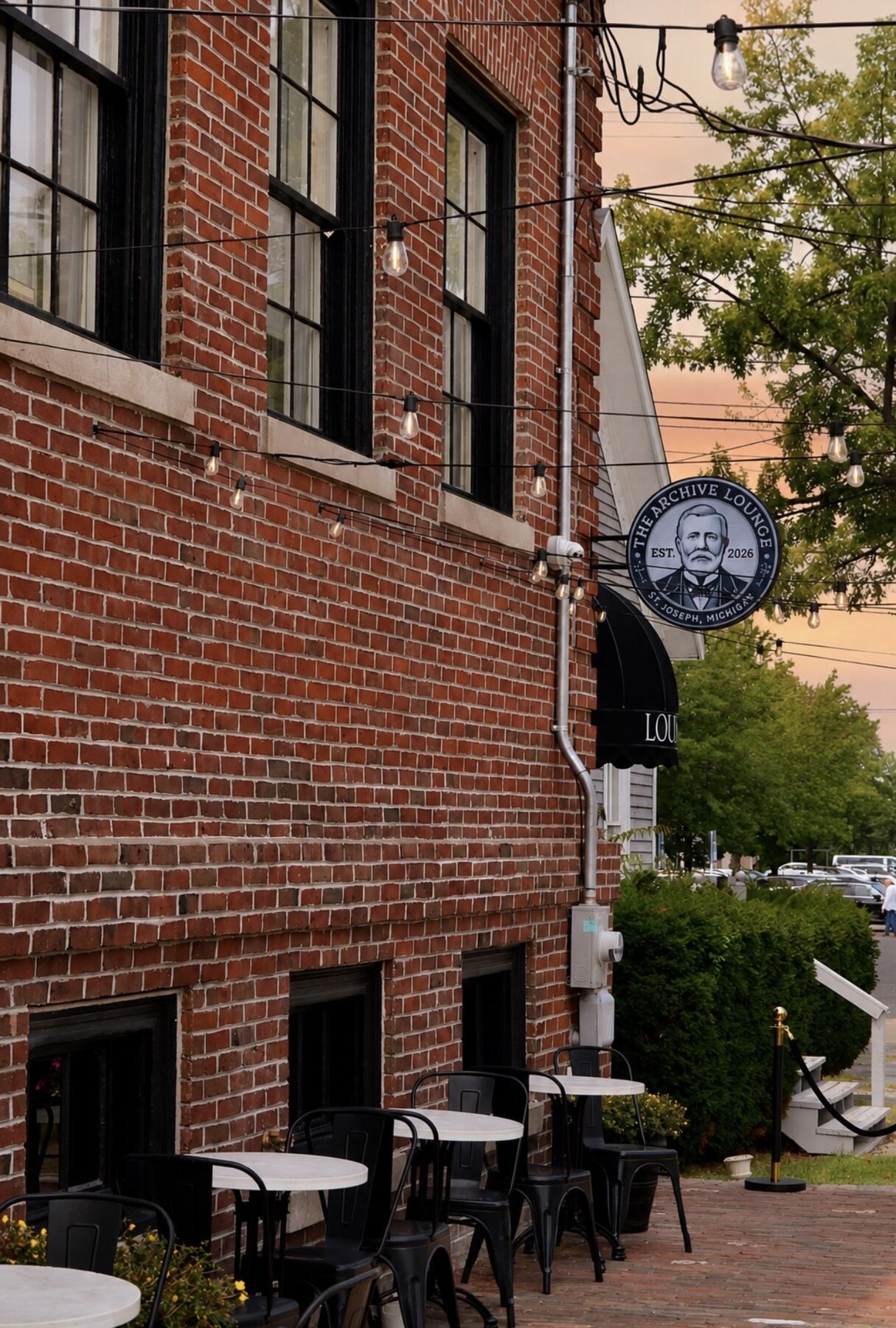
St. Joseph got one in 1904 — the same decade Chicago's underworld started summering here. The grant was $13,000 — real money at the time, and the deal Carnegie always made: he paid for the building, the town had to commit to funding the books and the librarians forever after. The library opened at Main and Elm on November 11, 1904.
What happened to the Carnegie libraries
Fewer than half of Carnegie's American public library buildings still operate as libraries. The collections outgrew them, accessibility standards passed them by, and towns built bigger, blander buildings on cheaper land.
The buildings themselves mostly survived, because they were built to last and because they're beautiful. They became museums, city offices, banks, apartments, private homes, restaurants. Thirty minutes from here, the Niles Carnegie library became a comedy club — sold, at one point, for $100.
St. Joseph's library moved out in 1966. The building stayed.

The problem with restoring a library
A Carnegie library is a difficult building to reuse well. The proportions are grand and the rooms are inflexible. The windows are enormous, which is wonderful, until you need bedrooms. The stacks want to stay stacks.
The easy version of this project would have been to gut it, keep the facade, and build a generic hotel inside. That happens constantly and it is always a little sad.
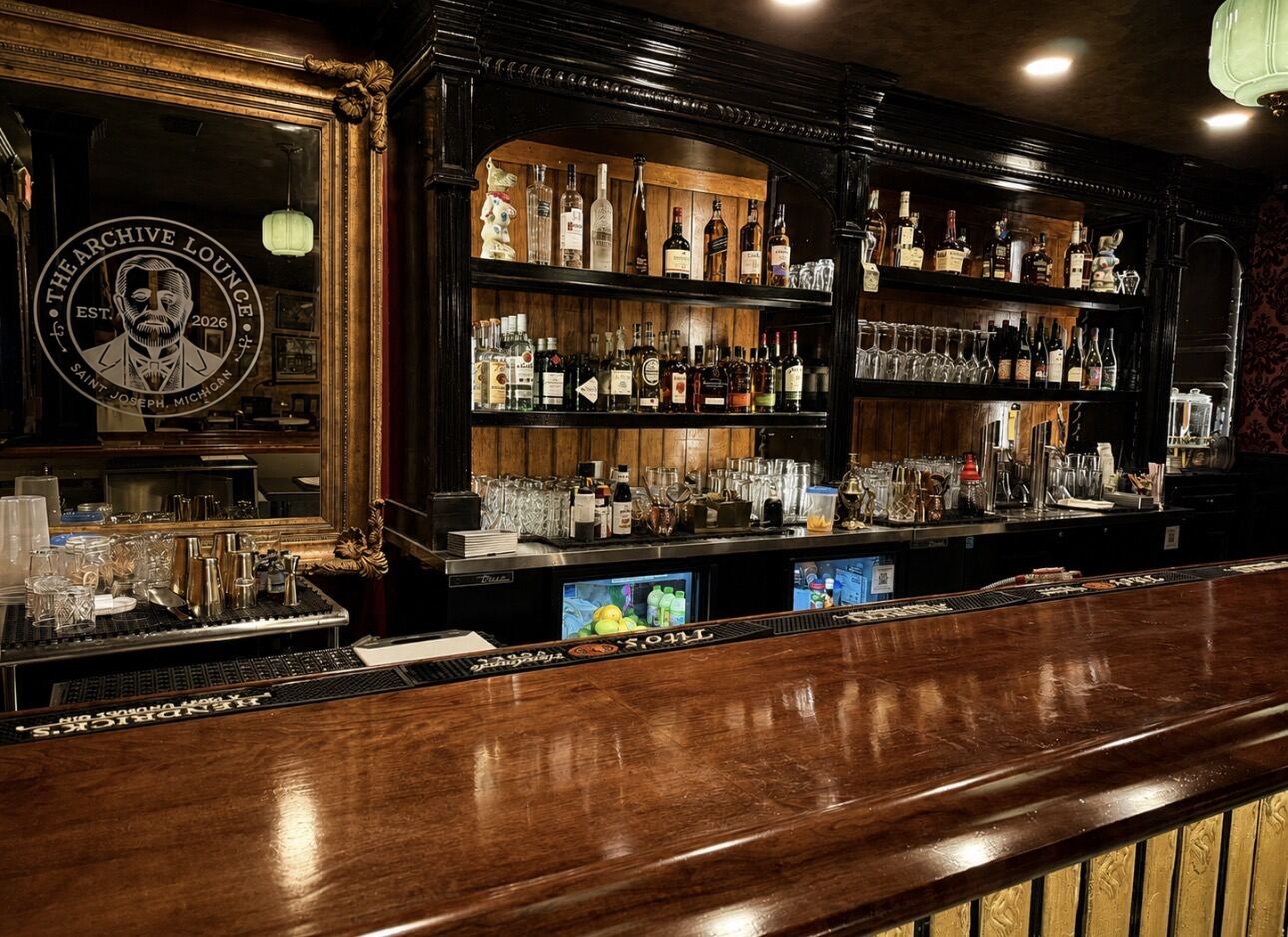
What happened here instead: six suites upstairs, a rooftop deck looking out over Lake Michigan, and — in the lower level, where the archives were kept — a bar.
Why the archives became the bar
The lowest floor of a Carnegie library is the least glamorous part of the building, which is exactly why it works. Low ceilings. Cool and dry, because that's what paper needs. Thick original brick. Very little natural light. It's a terrible place to put a hotel room and a nearly perfect place to put a bar.
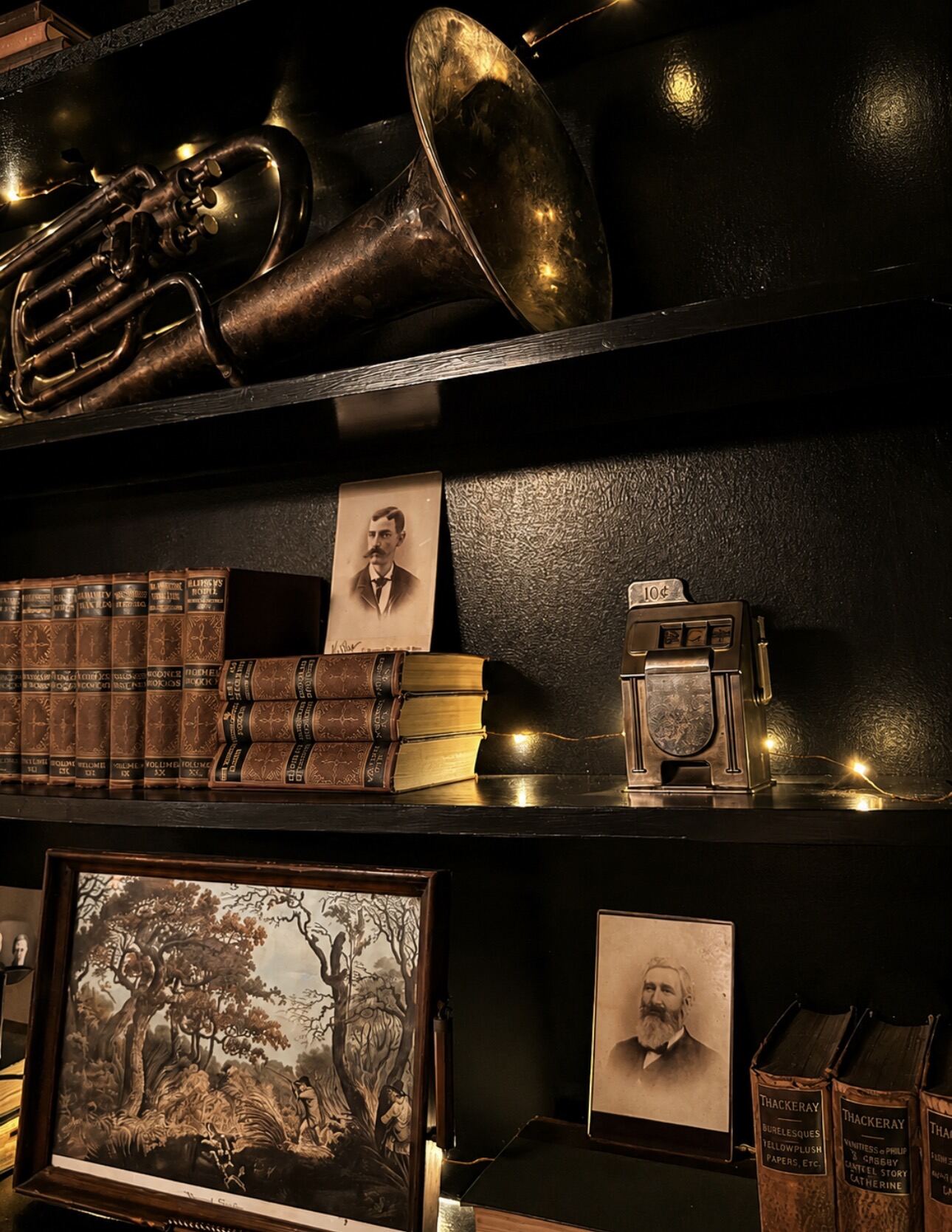
So we left it alone as much as we could. The brick is the brick the masons laid in 1904. The floors are original and hand-painted, worn smooth. The shelves still hold books — real ones, leather-bound, along with sepia portraits of people nobody living can name.
The radiators
The detail people ask about most is the bar itself.
When the building's original cast-iron radiators came out, they were ornate in the way that only turn-of-the-century industrial hardware is — heavy floral relief work on something that existed purely to make heat. Too good to scrap.
They were restored, finished in a soft gold tone, and set into the front of the bar. So the thing you rest your foot on while you order a drink is the thing that kept the archives warm for sixty years. It's the single most photographed object in the room, and it's the clearest answer to what this whole project was trying to do.
“We wanted it to feel like it's always been here — you just happened to discover it.”
John & Shannon
Adaptive reuse, honestly
Turning historic buildings into hotels is having a moment, and a lot of it is costume. A brick wall and some Edison bulbs and the word "heritage" in the brochure.
The test we'd offer is simple: how much of what you're looking at was actually there before? In this room, the brick, the floors, the proportions, the radiators, and a fair number of the books were. The cocktails are new. The lighting is new. Everything else predates all of us.
Carnegie's stated purpose in funding these buildings was to give ordinary people a place to go that they didn't have to pay to enter. A bar isn't that. But keeping the building standing, keeping it public, and keeping it recognizably itself feels closer to the spirit of the thing than another empty landmark with a plaque on it.