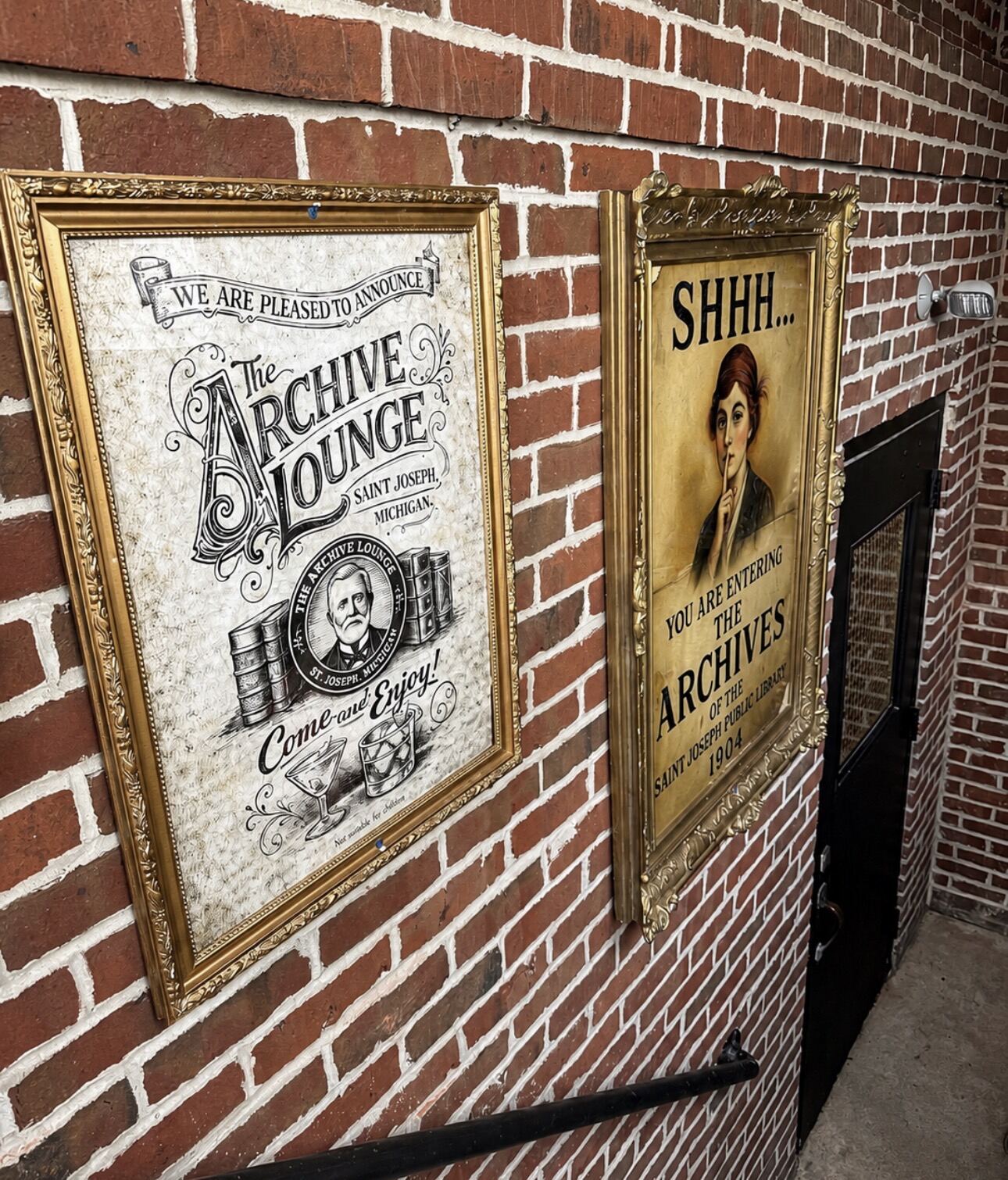
There is a version of St. Joseph, Michigan that most visitors never hear about. It isn't the one on the postcards — the lighthouse, the beach, the carousel. It's the one where Chicago's most notorious criminals kept summer houses, where a small-town police officer was murdered on a quiet street corner, and where a routine traffic stop cracked open the most infamous unsolved gangland killing in American history.
All of it happened within a few blocks of where you're standing when you visit downtown St. Joseph. Some of it happened within a few blocks of the 1904 Carnegie library that now holds The Archive Lounge.
Why Chicago's mob came to Southwest Michigan
Michigan's Prohibition story starts earlier than most people expect. The state went dry in May 1917 under the Damon Act — nearly three years before national Prohibition took effect in January 1920. It also ended earlier: on April 10, 1933, Michigan became the first state in the country to ratify the 21st Amendment. First in, first out.
What made Southwest Michigan valuable to Chicago wasn't the liquor, though. It was the state line. US-12, completed in 1927, ran from Chicago straight through Southwest Michigan toward Detroit. Ninety miles of highway put a working escape route between Chicago's criminal underworld and the jurisdiction of Illinois law enforcement. Cross into Berrien County and Chicago police lost their authority.
Add a lakefront full of resort towns where a man with money and no visible job didn't stand out, and the region earned the name it still carries in local history: Capone's Playground.
Capone at the Whitcomb Hotel
Al Capone was a frequent visitor to Berrien County. In St. Joseph he stayed at the Whitcomb Hotel, the 250-room landmark that opened in 1928 on the bluff overlooking Lake Michigan — a few blocks from Main Street. Across the river in Benton Harbor, he used the Hotel Vincent.
He wasn't alone. Several of his lieutenants owned property in the area, including Louis "Little New York" Campagna, Philip D'Andrea, Jake Guzik, and Paul "The Waiter" Ricca. This wasn't a single gangster taking a weekend off. It was an outpost.
December 14, 1929: the fender-bender at Broad and State
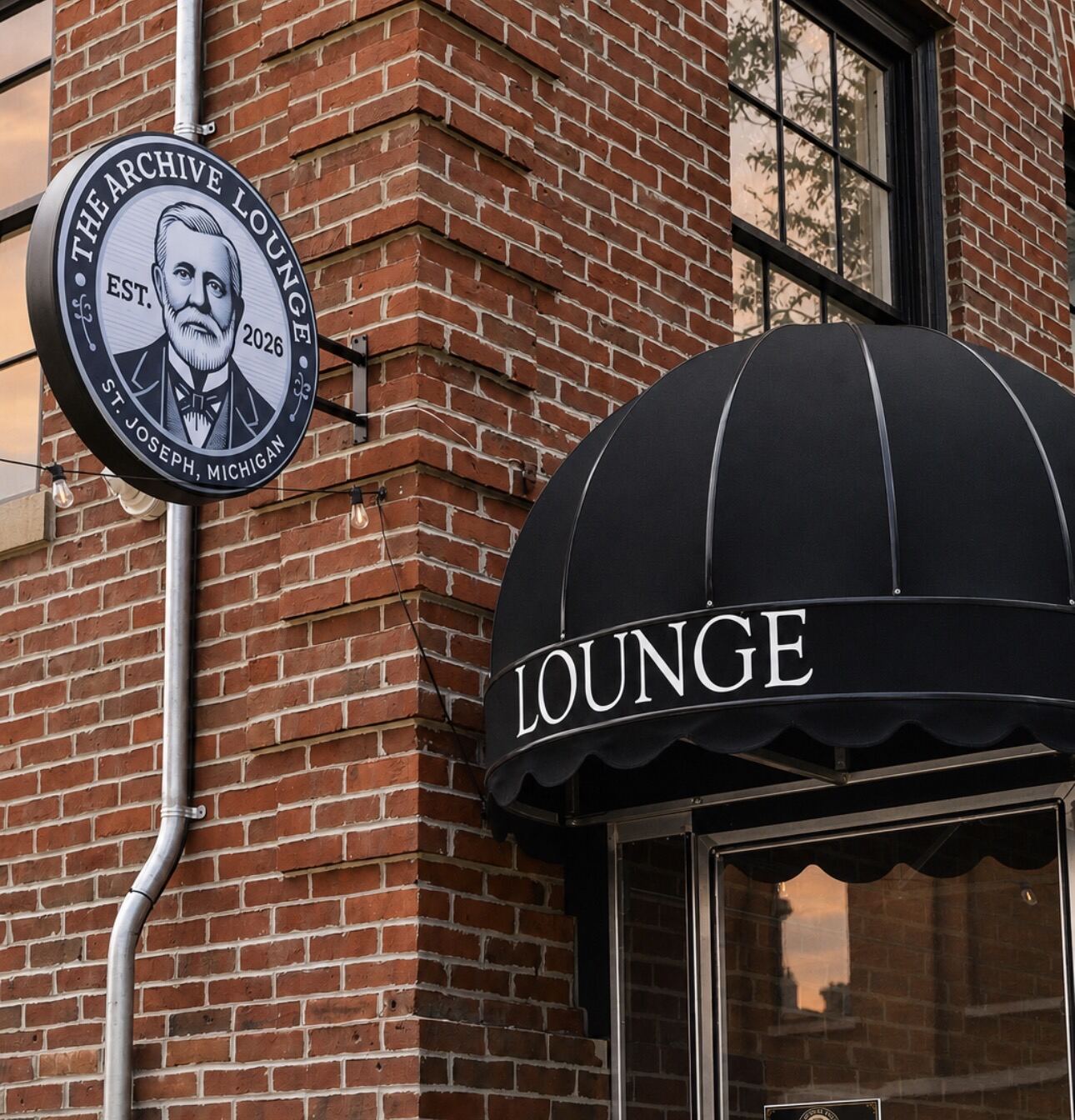
Charles Skelly was 25 years old and a patrolman for the St. Joseph Police Department. On December 14, 1929, he responded to a minor traffic accident at the corner of Broad and State Streets — an intersection roughly two blocks from where The Archive Lounge sits today.
One of the drivers had been drinking and refused to settle. Skelly climbed onto the running board of the man's car to ride along and sort it out. A short distance later, the driver pulled a pistol and shot him three times.
“Get that guy!”
Officer Charles Skelly's last words
Skelly died. The shooter fled. And what investigators found next turned a small-town murder into a national story.
The house in Stevensville
The man who shot Officer Skelly had been living quietly nearby in Stevensville under the name Fred Dane. He was not Fred Dane. He was Fred "Killer" Burke — a Chicago hitman wanted across several states.
When police searched his house, they found two Thompson submachine guns. Colonel Calvin Goddard, the forensic ballistics pioneer, examined them and confirmed what nobody in St. Joseph could have expected: these were the guns used in the St. Valentine's Day Massacre — the February 14, 1929 killing of seven men in a Chicago garage, the single most infamous mob hit in American history. One of the weapons was also tied to the murder of New York gangster Frankie Yale.
Burke was eventually captured in Missouri in 1931. He was never tried for the Massacre. He was tried for killing Charles Skelly, convicted, and sentenced to life. He died in prison in 1940.
The story has since been covered by The History Channel, PBS, and National Geographic, and documented at length in Chriss Lyon's book A Killing in Capone's Playground. Berrien County's own government maintains a page about it. But it remains, for most visitors, completely invisible — a national-headline crime that left almost no mark on the streets where it happened.
A short Prohibition walk through downtown St. Joseph
If you're in town, the whole story fits in a walk of maybe fifteen minutes.
- Broad & State Streets — where Officer Charles Skelly was shot on December 14, 1929, and where the St. Valentine's Day Massacre investigation quietly began.
- The Whitcomb — the 1928 hotel on the bluff where Capone stayed. Now senior living, listed on the National Register of Historic Places in 2021, and still the most imposing building on the skyline.
- The bluff and Lake Bluff Park — the view that made this a resort town in the first place, and the reason Chicago money kept coming across the lake.
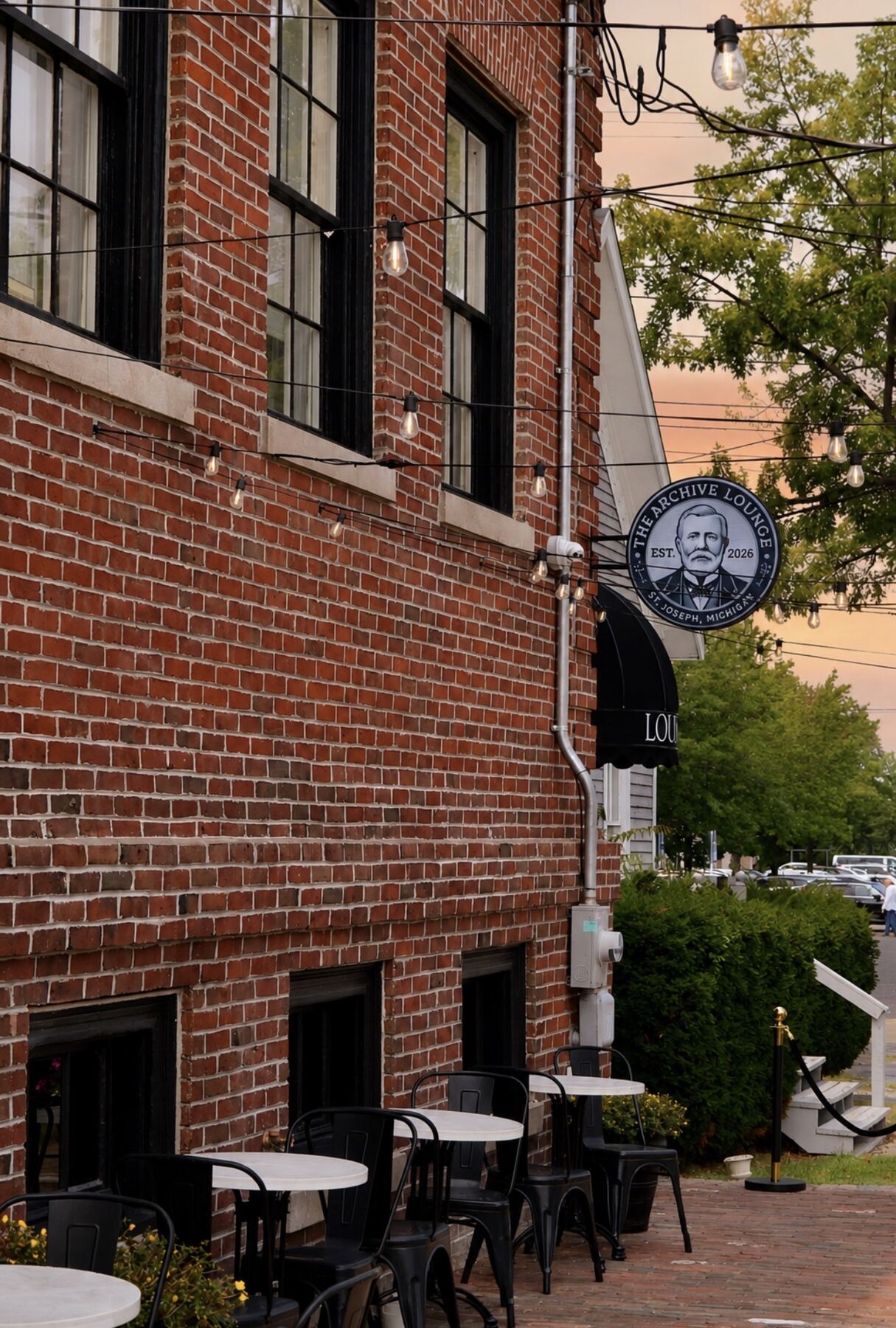
- 500 Main Street — the 1904 Carnegie library. Its lower level held the archives while all of this was happening upstairs and outside. That room is now The Archive Lounge.
Drinking in the aftermath
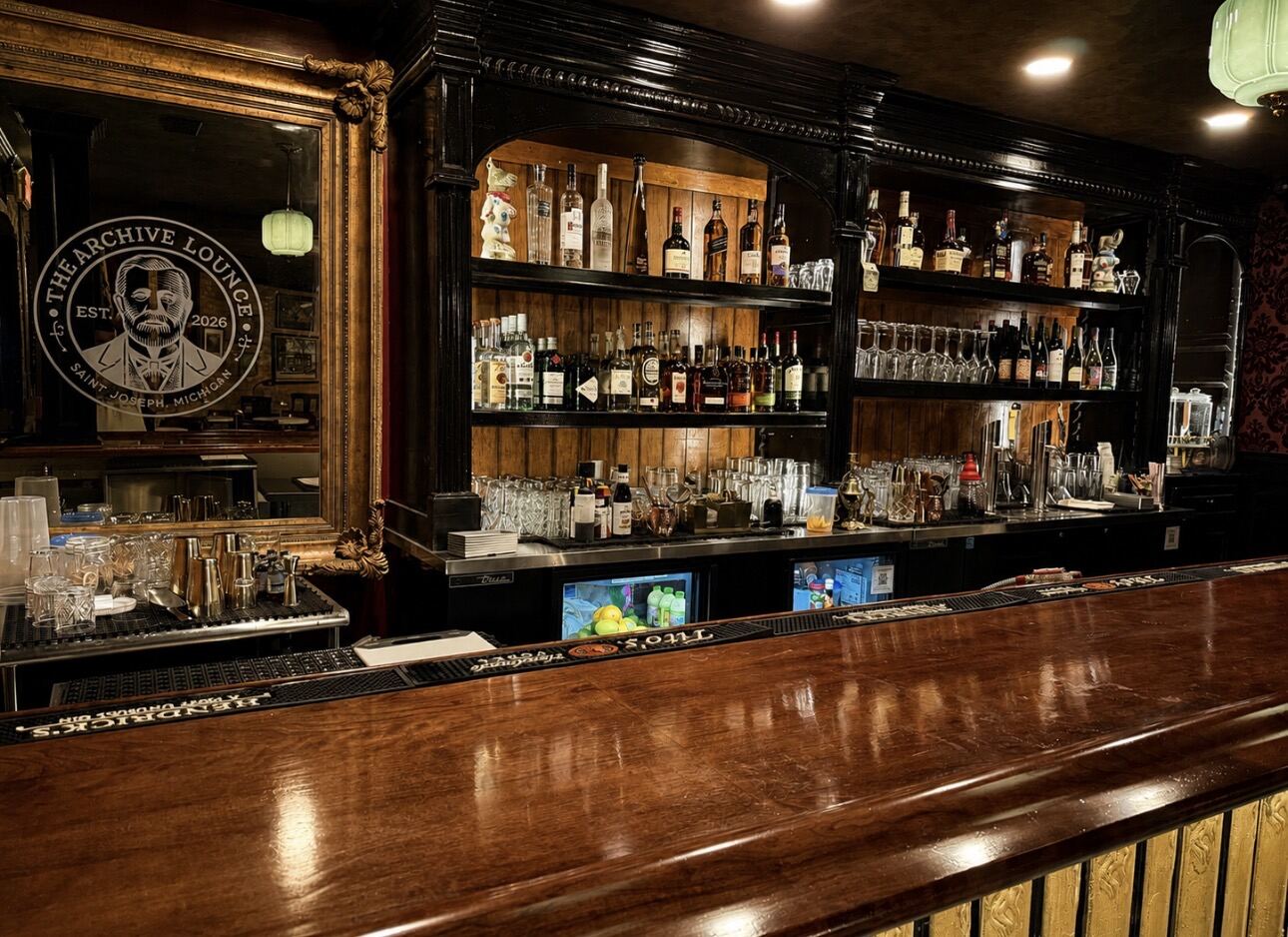
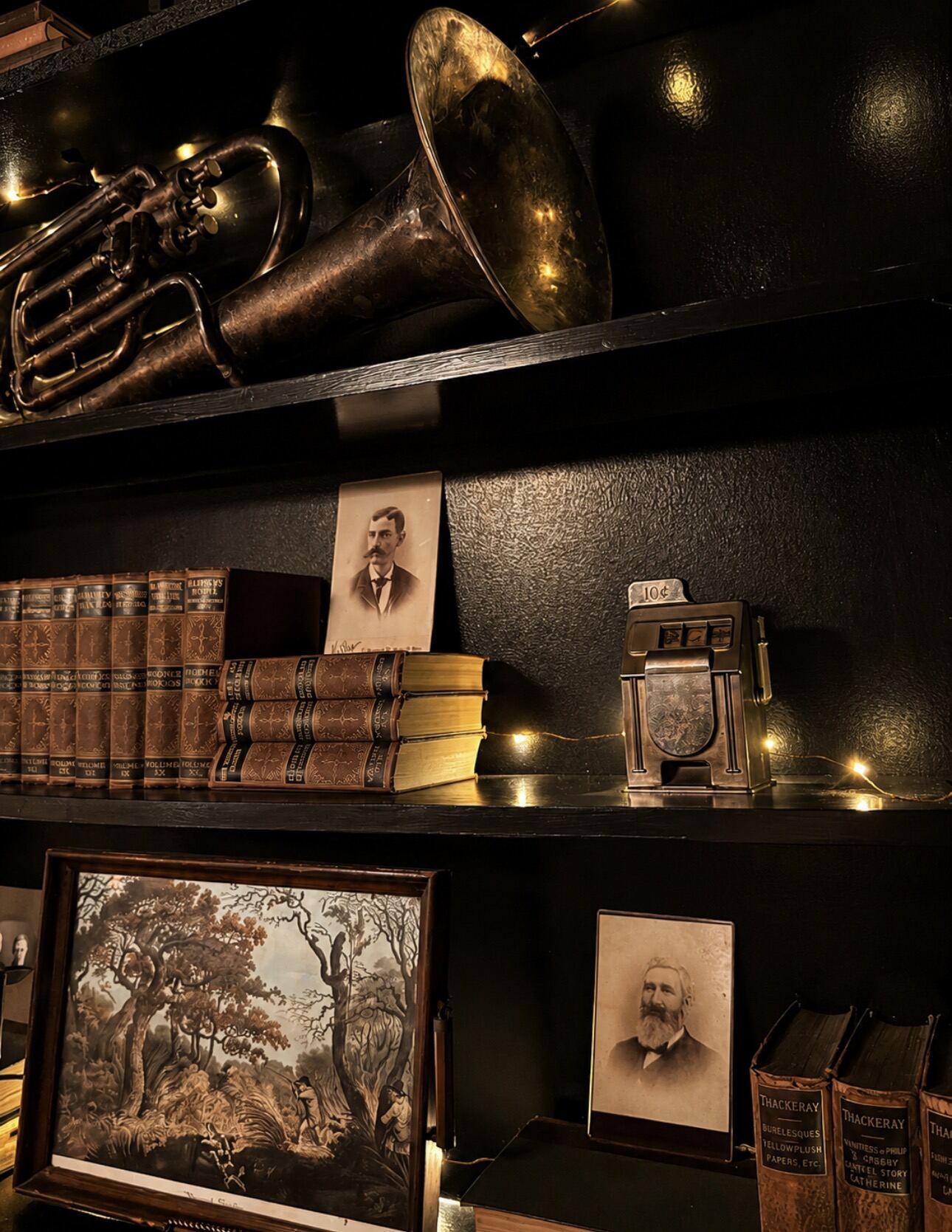
The Archive Lounge isn't a Prohibition museum, and we don't pretend the building was a speakeasy — it was a public library, and a good one. But the room does sit in the same few blocks of the same small town during the same years, and the era it borrows from isn't imported from somewhere else. It happened here.
You'll find us in the lower level at 500 Main Street, open daily from 4:00 to 9-ish. Seating is first come, first served. The cocktails are built on classic technique — the same drinks people were making badly with bathtub gin in 1929, made properly now.